Bumkil’s Case (From Seoul to Tokyo, Messenger/Student)
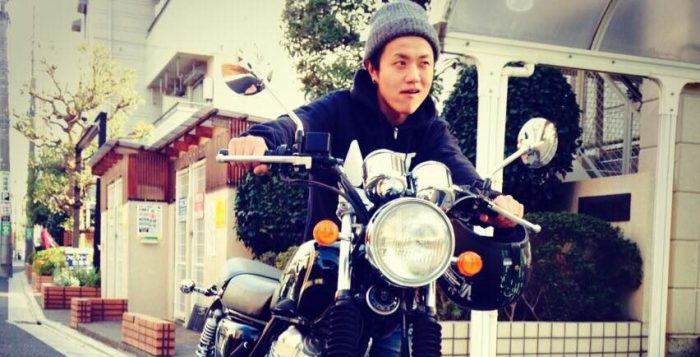
Bumkil has moved to Tokyo from Seoul. Since Bumkil speaks very natural Japanese, this interview was held in Japanese. To my surprise, he says that he started to study Japanese by himself during his military service in Korea.
Profile
Name: Park Bumkil Age: 30
Bumkil was born and raised in Seoul, Korea. After serving in the military, Bumkil took a working holiday in Japan for about a year when he was 21 years old. After that Bumkil went back to Korea, entered a University and dropped out. He then had several jobs such as a Korean and Japanese interpreter. He returned to Japan when he was 26 years old. He now is a student at Tokyo University of Foreign Studies and also works as a messenger for a Japanese company.
Taught himself Japanese while in the military
—————When did you start studying Japanese?
Bumkil: Before coming to Japan I served in the military for 2 years, I studied Japanese for 16months at that time.
—————Is there such a program to study Japanese in the military service?
Bumkil: No, no, I taught myself using the allotted bedtime. In the military service, we had 6 hours for sleep, 3 hours during the day, 3 hours at the night. Day and night before sleep, I used 1 hour each to study.
 —————What was the reason that you started to study Japanese?
Bumkil: Hmm well, I wish I had a clear answer, but honestly I was not thinking much about anything. Back then I was a communication soldier in an area, which faces North Korea, and I was running with a wireless communication device on my back every day.
The mission of a communication soldier is to report to the headquarters or as search parties in the case of catching any suspicious movements on the North Korean side. It was just an extremely tough area. There was this staircase with 4,000 steps and I had to run it for 20km, back and forth. I did the run every single day.
It was just so difficult to go up the 4,000 stairs one by one, I thought that maybe I would memorize something to distract myself, maybe a language with Chinese characters. But I was not sure if I wanted to just memorize Chinese characters. So I started to study Japanese. Actually it did not feel as tough even when I was going up the stairs, repeating what I memorized in my head over and over.
Right after I finished the army service, I passed the exam for the N1(which is the highest qualification) of Japanese Language Proficiency Test.
–————–In the army, did other people memorize or study something for the same reason?
Bumkil: No, I don’t think so. Everyone would just go to sleep or take some rest.
—————I see. I totally did not see this answer coming.
Bumkil: I know right? So there was no decent reason for choosing Japanese.
Right, I have never spoken in Japanese
————–How did you learn spoken Japanese?
Bumkil: I could not speak it at all back then. I could read and write with no problem, but speaking, not at all. I only realized that when I arrived at Narita airport, that I couldn’t really speak it. It was quite a surprise, hahaha. I could read, understand what people around were talking about, but when I tried to speak, I had no clue how. Then I was like, “Right, in fact I have never spoken in Japanese” [laugh].
————–Then you lived in Japan for about a year for a working holiday right. How did your speaking improve during the time?
Bumkil: I guess during the time, I was already speaking like I do now. It improved naturally as I spent time living here.
“Just speak words you already know”
————–You didn’t go to Japanese language school, did you?
Bumkil: No, I didn’t. I would listen to Japanese double act comedy and dramas. About the double act comedy, I would listen to it and shadow what they said all the way though. I think shadowing is a very effective way to study other languages. If you do shadowing after studying the language’s grammar to some extent, it makes it easier to memorize new vocabulary as well.
————–It is amazing you can speak like this with comedy and drama!
Bumkil: Though in the beginning, I did have a hard time speaking Japanese. It was frustrating and I was like, “Why can’t I speak it at all”. Then I talked to a Mongolian friend of mine. He has lived in Korea and is fluent in Korean. I asked him “Why can you speak Korean so good?” and he said, “Don’t translate things inside your head. Just speak words you already know”. Since he gave me that tip, it has become so much easier for me. Even if you only speak words you know, as you converse with someone, what you understand naturally expands, right?
————–What triggered you to come to Japan after the military service?
Bumkil: I knew Japanese language and there was the working holiday, so I thought like let’s do it then.
Concerns about coming to Japan
————-Did you have any expectations or concerns before you came to Japan?
Bumkil: I had no expectation in particular, but when it comes to concerns, there is this historical relationship between Japan and Korea. Nowadays I think things have changed in Korea but when I was a kid, people would tell me things like “Japanese people are such and such”. So I had this concern like “Is that really true?”
Plus in Japan, there is an anti-Korea movement and sometimes you see those protests, right? The media reports them in Korea, so when I heard about such news, it actually felt scary. But I believe ordinary people in Japan don’t think the way they do, do they? There exists an anti-Japan movement in Korea as well, but the situation is the same there. Ordinary people don’t think like they do at all. I wonder why they have to do things like that.
————-Are there many people who go for working holiday after the military service?
Bumkil: Hmmm, I am not sure. Many people go to serve in the army around the junior year of University, so I guess they would mostly go back to school after the service. I hear that many Israeli go overseas after their service, because the service is so tough that they would go somewhere to release the stress away. Though things are different in Korea. It is rigid and strict, from job-hunting to such and such. People are supposed to complete certain stuff by a certain age, so we feel we can’t really afford to have a mindset like that.
————-Didn’t you mind these strict ideas in Korea? That people are supposed to finish by a certain age?
Bumkil: No, I didn’t mind it at all. I have always had this nature that I don’t want to do things as people tell me to do them. Like, what is the point of me doing what people call “normal”. There are bunch of others who would do it. So I have been thinking like, it’s all right that there is a guy like me. After all there are plenty of guys like me as well, right [laugh]? So I am aware of the sort of responsibilities that may come with the way I choose to live.
————- When did you serve in the military?
Bumkil: At the age most Koreans graduate from high school. In my case, I dropped out of high school when I was a freshman. I got the qualification for high school graduation the next year. Then the year after that I had nothing to do, so I stayed in Philippines for about 3 months as I had a friend there. After that I joined the army.
Working holiday changed something
————-What did you do when you were in Japan for the working holiday?
Bumkil: Initially I did not have a job, but after a while I started to work for my friends’ business. They ran a fashion brand specialized in leggings and it was a big hit in Korea, so they were trying to sell it in Japan as well. Though before actually doing anything in Japan, business started to fall and eventually it deceased. The work I was doing finished a little less than 1 year, then my visa was already close to expire. I went back to Korea right after that.
————-At that time, did you think that you would ever come back to Japan?
Bumkil: Yeah. Having lived in Japan for about a year, something had definitely changed inside me. I can’t describe what had exactly changed. Like, after I went back to Korea, I realized I did not like it when people don’t apologize even if it is obviously their fault. It is those tiny little things, like when people accidentally bump into someone. That sort of stuff frustrated me. Though I did not mind it at all before I left Korea.
Let’s pick somewhere in between us, Tokyo then!
————-What triggered you to come back to Japan?
Bumkil: My ex-girlfriend. She is from Osaka; I started to date her while I was in Korea. We met when she was travelling in Korea.
————-How did you decide to actually move here?
Bumkil: I wonder how I did it… I always act without thinking at all, so I guess I was like “Ok then I am gonna move to Tokyo”, so lightly [laugh]. Back then she lived in Osaka, so we were like “ Let’s pick somewhere in between us, Tokyo then!” Actually it was not geographically between us at all though [laugh]. I didn’t want to go to Osaka. Somehow there is not much difference between Korea and Osaka. I wonder what it is about Osaka?
 ————-How has your life been in Tokyo?
Bumkil: I have worked as a messenger this whole time. I started to go to University last year. Nowadays on weekdays, from morning to afternoon I go to school, from 5pm to 11pm I work. It is tough.
————-What was the reason for you to choose the job as a messenger?
Bumkil: Well I do like bicycles and motorbikes, and I am so good at maintaining them as well, if I do say so myself [laugh].
I knew the company I work for from before. When I was in Japan for working holiday, the guy living next to me was a messenger for the company. Then I used to think like “He rides such a cool bike, being a messenger would be so good”. So I thought once I am back in Japan someday, I would want to work for the company. Then after I came back to Japan, one day a messenger of the company passed by me by chance. So I stopped him to say I wanted a job there. Then he gave me his card; I called, had an interview and got a job.
Thoughts occurred while in Japan
————-Would there be any good thing about living in Japan?
Bumkil: Good thing… now I am asked like this after all these years, I am not sure. I guess my sense might have become somewhat “Japanese”. What is a good thing..? Hmmm, nothing! Seriously, I can’t think of anything [laugh]. People here are kind, so that is a very good thing. Though things always come with good aspects and bad ones as well. So there could be some cases that being kind might be bad. On the other hand, even when something appears to me as a negative, I think that there could be something positive about it too. So I don’t really care much about it.
————-Having lived in Japan, do you think you have changed?
Bumkil: Yes, I think I have changed. When I was in Korea, there was always a part of me, which cared about how Korean youth are supposed to be, or how they are expected to live. For example, get a certain score at TOEIC, graduate from University and acquire some certifications, that sort of stuff. Back then I would deny those values though a part of me cared about it somehow.
In Japan, there are many part time jobbers, many who live their lives in their own ways, without being employed fulltime. That fascinated me. The longing and belief that I had, that it is alright to be free and original was somehow completed I guess. I think Korea has changed a lot these days, though before contract workers who are not full timers, their payment was extremely low. Basically people needed to be full timers to survive.
 ————-What do you miss the most about being back home?
Bumkil: Drinking with my friends. Everyone drinks the same, crazy amount. That is fun. We all get drunk and stupid to the same level. Even if I did dumb stuff, other guys do even dumber stuff so it kinda wipes off what I do [laugh]. In Korea, it is normal to get drunk. Well maybe I should not generalize that but, it is with the people I hang out with. Both men and women, even on weekdays.
In Korea, mostly we decide to hang out for drinks on the same day. We don’t plan things much in advance. Whereas in Japan, when I ask my friends, many would say “Well, let me check my schedule first” then the plan turns out to be like 3 weeks later. I am like, “ I have no idea what’s going on 3 weeks later”, hahaha. So I ask friends when I feel like drinking. When I feel like it, I think they feel like it too more or less [laugh].
Why the heck am I in Japan?
————-Would you consider relocating yourself again?
Bumkil: Yes, I would.
————-Would there be any specific place in mind?
Bumkil: No. Wherever I feel like. Really, wherever. If I think it is a nice place when I am on a trip, I would go ahead and move there. I always don’t think much about the future. So sometimes I feel like, “Why the heck am I in Japan?” It’s not like I have a strong attachment to some specific countries. I feel like I could live wherever.
————-What would be a standard that makes you feel like it’s a “nice place” ?
Bumkil: Nothing in particular, I guess. I think there is nothing, but there could be something. Though I still have to figure out what it is.
————- I guess that’s all I wanted to ask today. Would there be something you would like to add?
Bumkil: Maybe not exactly like something to add to the interview but, it’s good to find out that it is fun to talk about these kinds of things.
 ————-Glad to hear that! It was so fascinating to hear you talk about it, like how things were like in the army and such.
Bumkil: Nope, that part is not fascinating for me.
————-To me, it is [laugh]!
Bumkil: Naah [laugh].