Hauru’s case (From Tokyo to Kaohsiung and to New York, then back to Tokyo/Office worker)
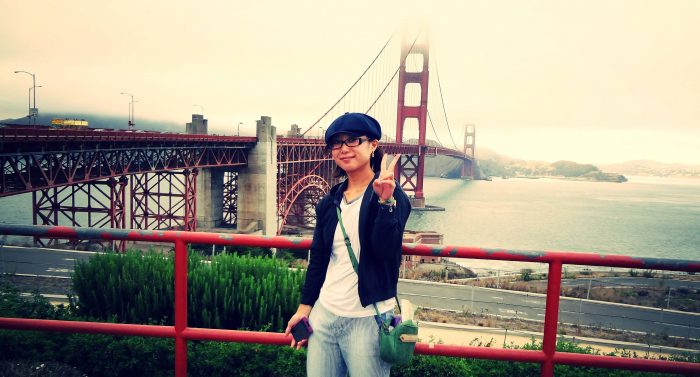
Hauru, who has Taiwanese parents, was born and brought up in Tokyo. She lived 4 years in Kaohsiung as a student and 5 years working in New York, and now is back living in Tokyo. She says with a laugh that she was filled with expectations before both her relocations, but adds, “After I actually moved, all I had was anxiety. Both in Taiwan and in the States, it took a while to be able to enjoy it.”
Profile
Name: Hauru Age: 35
Her parents moved to Tokyo from Taiwan when they got married and Hauru was raised in Tokyo. After she graduated from high school, she attended National University of Kaohsiung in Taiwan. After graduating, she moved back to Tokyo and had a few jobs, then moved to New York due to her husband’s job situation. After spending 5 years there, they moved back to Tokyo last year.
How she decided to go to National University of Kaohsiung
—————When did you decide to go to the university in Taiwan?
Hauru: I think it was right after I went into the third year of high school. I went to a high school that had course system, and I took International study courses. So, there were many of us who intended to study abroad. I initially wanted to go to English speaking countries, but the tuition was expensive. Also considering that I could not speak Chinese at all back then, I thought why not studying the language of my roots before English. Taiwan appeared to be a good option.
Then, by coincidence I received an information letter at my house that said, “National University of Kaohsiung has been newly established”. I knew that overseas Chinese association sometimes recruits overseas Chinese students, but somehow that exact information was delivered to my house directly. It said why don’t you take an exam, so I thought, “How timely is this! Why not give it a shot.”
Both of my parents had extended families in Kaohsiung, so I had visited them several times. The place is very hot all through the year. Very humid too, it almost feels like you are in a sauna[laughs].
—————What was the exam to enter the university?
Hauru: They asked for my degree from my high school and I needed to submit an essay either in English or in Chinese. After the submission, first I was on a waiting list, but eventually admitted after a vacancy became available.
Overseas Chinese gathering from all over the world
—————How many overseas Chinese students were there?
Hauru: In the department I entered, which is of Asia Pacific Industrial and Business Management, there were many. One third were overseas Chinese, two thirds were from Taiwan. Overseas Chinese gathered from all around the world, including Hong Kong, Malaysia, Canada, and South Africa and such. There was no international student other than overseas Chinese.
—————It sounds very international even just with overseas Chinese, interesting!
Hauru: Exactly! There was such a variety across languages and cultural backgrounds. We all were overseas Chinese, though I found everyone was very different from one another.
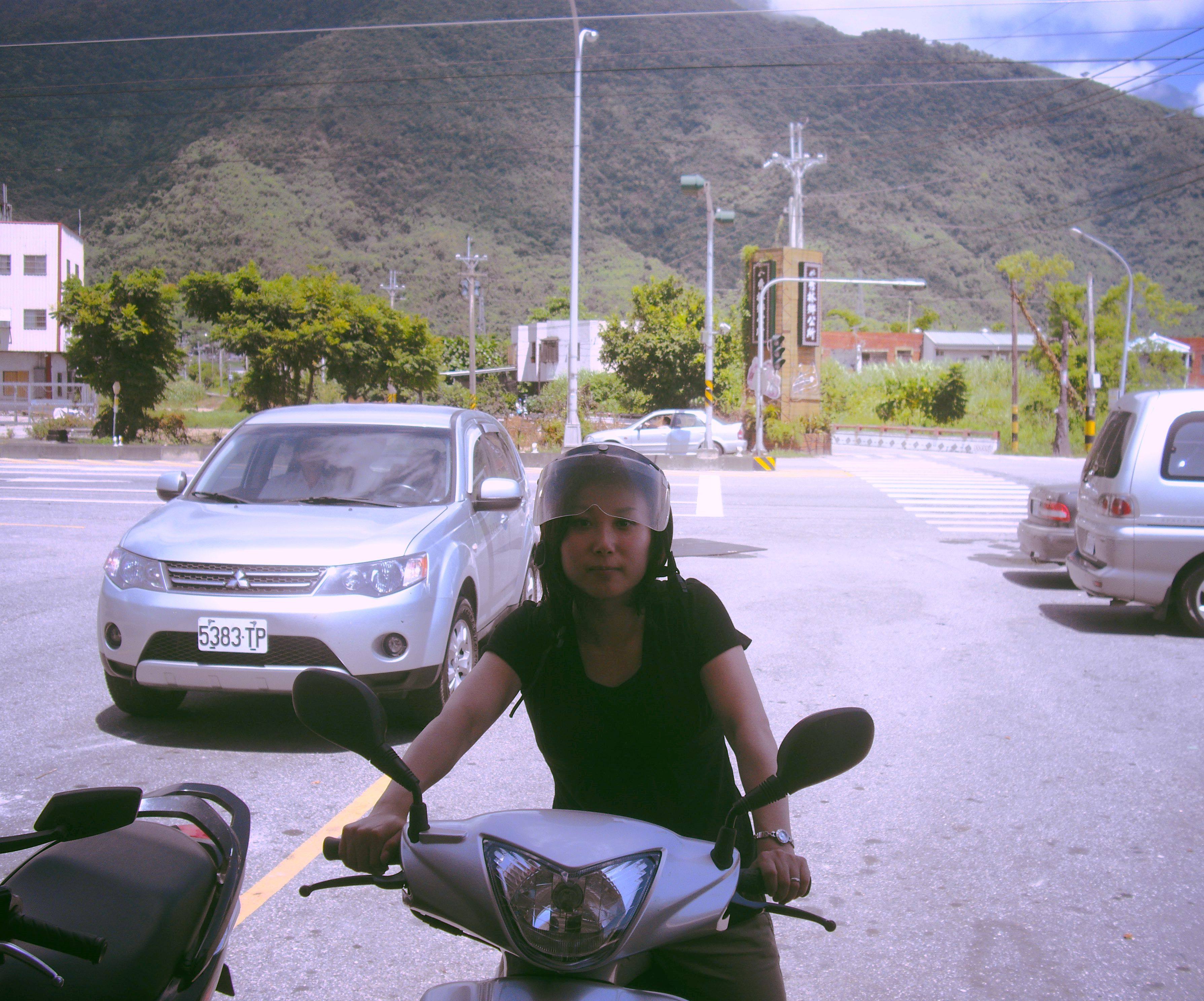
I wonder why I did not study Chinese
—————Did you study Chinese language before you moved to Taiwan?
Hauru: Hardly. When I look back, I wonder why I didn’t study [laughs]. At home, my parents would talk to each other in Chinese, though we children spoke only in Japanese.
In the university, they had Chinese language courses for international students, but I didn’t know they existed before I started and ended up not taking it. I totally didn’t understand the language at all though [laughs]. Fortunately, textbooks used in university were in English. If they were in Chinese, I would not have been able to graduate.
—————Did other Overseas Chinese students spoke Chinese?
Hauru: Yeah, they all did. Even students from Canada or South Africa, they were fluent in Chinese. My mother says, “I should have made you speak more in Chinese at home.” When I look back now, I wonder if I missed out.
—————Did you have any expectation or concern before you relocated to Taiwan?
Hauru: I am pretty much an optimistic type, so every time before I move, I am filled with hope and expectations, like “I will be making new friends” or “I am going to be fluent in Chinese”.
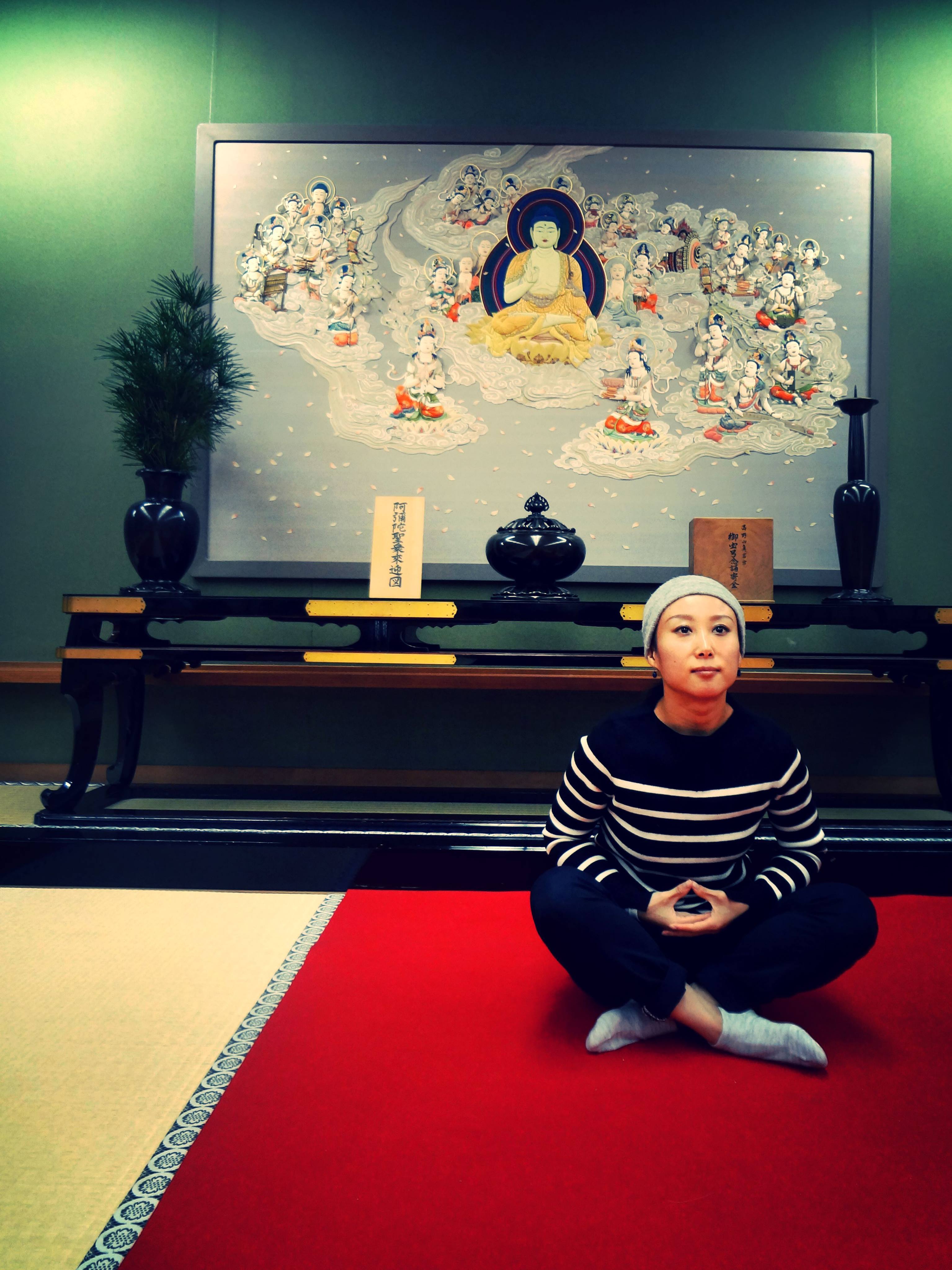 After moving, all I felt was anxiety
—————What did you actually feel when you moved to Taiwan?
Hauru: When I got there, all I felt was just anxiety. Having left my home for the first time, not even knowing the language there, I was overwhelmed and not sure if I could make it through. Plus, I found out that the university was in a remote suburb, and the premises were not even finished. They didn’t have piped water, and there were piles of dirt around. I was like, “How dare they recruit students under such conditions.” [Laughs]
“I can’t do this, this must be the end my life,” that is what I was feeling honestly [laughs]. I found many things difficult in the first 6 months. Then I ended up taking only the minimum of required classes; I immured myself in the dorm the rest of a day.
—————What helped you to stop immuring yourself?
Hauru: I got a boyfriend [laughs]. I met him during a class, he was Taiwanese. People say when you have a boyfriend who speaks the language, your language comprehension skyrockets, and that was correct [laughs]. My Chinese started to improve by the second. In the last half of my time studying there, I was able to speak almost like the locals. Though I couldn’t understand Taiwanese language.
—————Is Taiwanese very different from Chinese?
Hauru: Yeah, very. Chinese is Mandarin, which is called Pekingese as well. Taiwan has its own language: Taiwanese. My father’s ancestors were originally from Taiwan, they spoke Taiwanese. My mother’s were from main land China, they moved to Taiwan as political refugees as a result of Chinese Civil War.
In Taiwan, they use Mandarin in schools. Students would get scolded if they were caught speaking Taiwanese in schools. I know someone my age who was scolded. I assume they don’t do that anymore though.
—————By the way, what was the reason your parents relocated to Japan?
Hauru: My father said he wanted to run his business in Japan. My mother studied in a two-year college in Japan. They met at work in Taiwan, then they moved to Japan when they got married. He owned his business which involved souvenirs. My mother’s father studied at Keio University, so apparently, he has influenced her about Japan.
—————How was the student life in Kaohsiung?
Hauru: I was always struggling to keep up with my studies. Even if there was a test that other students found easy, I was instantly behind because of the language. I always felt I had to study harder than others. On weekends, I would visit my extended family’s house in Kaohsiung and my cousin would help me study. In Taiwan, they don’t really go for drinking or partying while in university. They all study.
Back to Japan, then to New York
—————How did you make your plans after graduation?
Hauru: I thought about getting a job in Taiwan, though most companies required Chinese as a first language. At the end, I decided to go back to Japan, though I hadn’t made any decisions on what to do there. Many of my friends from university went to graduate school, some of my male friends went to do military service.
After I came back to Japan, a member of the Diet of Japan, whom my father knew, let me work for him as a private secretary for a year. After that I changed jobs and started to work at an online research company; leaving there after about 2 and a half years when I got married. My husband got a job in New York and we decided to go together.
————— When you were moving to New York, wasn’t it hard to leave things you were attached to?
Hauru: No. It was the moment that I wanted a change. At work, I was very busy. I was having a hard time with my health, though I was very fortunate to have great coworkers. Plus I had always wanted to go to America. So I felt like I could wish for nothing better. And I said, “I will go!”
This time again, all I had were high expectations [laughs]. Like “I like the idea of going to America” or “Am I going to be fluent in English?” Though after I got there, again I was like “I have no idea what people are saying”, or “What am I going to do”? [Laughs].
The job her mother led her to
—————How was your English before you moved to America?
Hauru: I could not speak it at all, but I could read and write a little. In New York, people talk super-fast and I had no clue what they were saying. I found it hard there, including the language situation; and once again I immured myself [laughs]. When my husband went to work, I stayed inside the apartment all the time.
—————What helped you to get out of being immured this time?
Hauru: I started to go to language school, Monday through Friday, for 5 months. After a while I started to work as a receptionist at a dentist in the city.
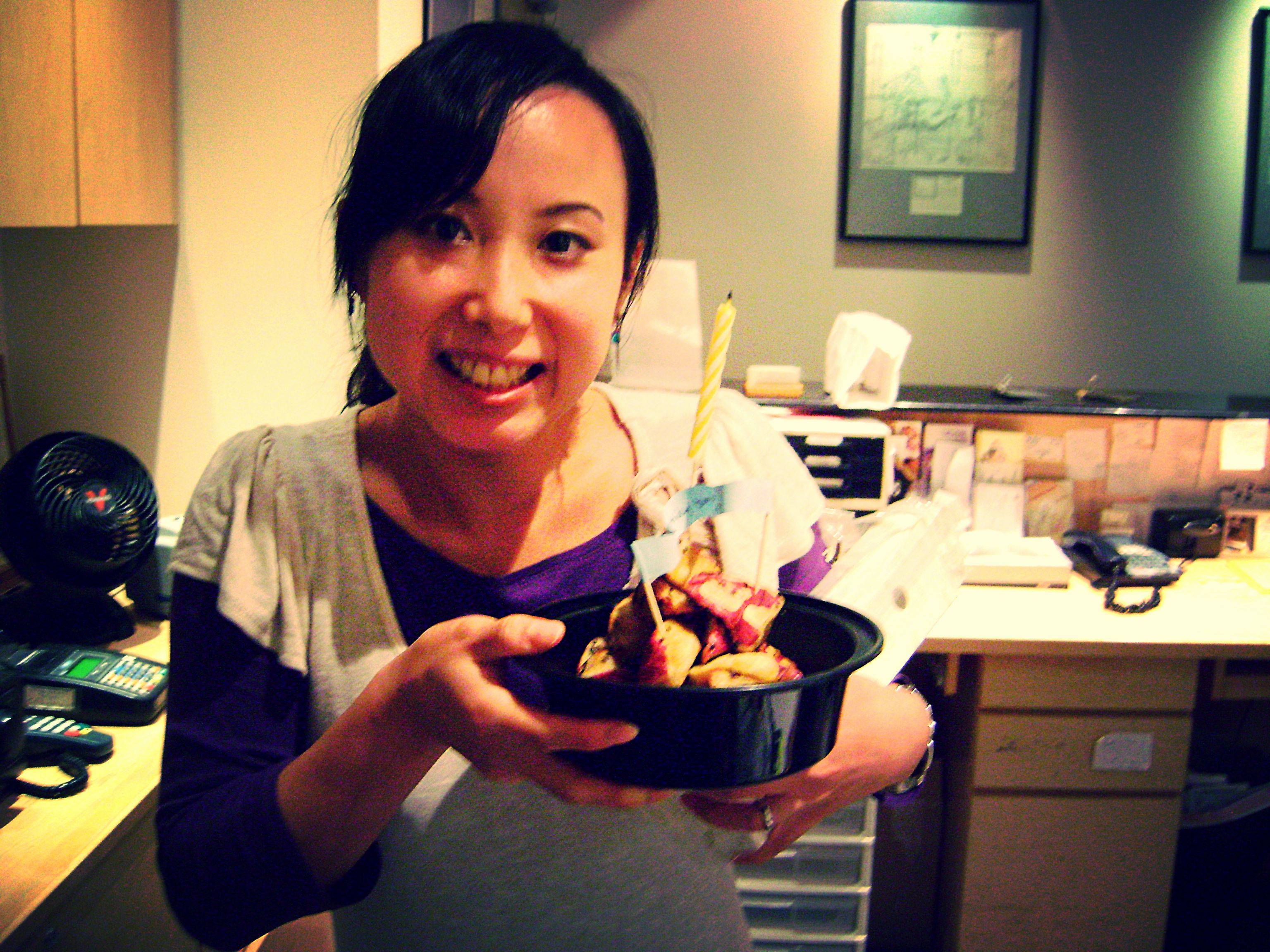
————— How did you find the job?
Hauru: When my mother was visiting us in New York, she hurt her arm and went to a clinic where a Taiwanese doctor works. Then the doctor and my mother hit it off; she frankly asked the doctor, “Do you know any job opportunities for my daughter?” Then the doctor kindly introduced me to a friend, who was a dentist.
The dentist was also Taiwanese and there was a Japanese assistant. About half of the patients were Japanese; the other half spoke Chinese, so I thought it was perfect for me. Actually though, I also needed to make phone calls in English, which was pretty challenging. Thanks to that, I guess, my English improved.
————— How long did you work at the dentist?
Hauru: For about 2 years. I wanted to work at a company and considered changing jobs.
Then my father, who lived in Taiwan at that time, had serious health issues. He had been fighting with liver cancer for a long time. I used to think that he would get by like this for a long time, though the situation changed all of a sudden. He used to have an athletic physique, but he looked so thin and out of shape. I quit the dentist to go to Taiwan, half expecting and hopeful that I would see him go. Though he passed away while I was preparing to go back; I couldn’t make it in time. After that I stayed in Taiwan and Japan for about 2 months, taking care of his funeral and arrangements with my mother.
Then I went back to New York and started to look for a job, while working at the dentist. They readily accepted the condition that I work there till I find a new job. They supported me a lot.
Coworkers from Japan in New York
—————What was the next workplace like?
Hauru: It was a Japanese company I found through a Japanese agent, which is a trading company for fashion materials.
The office was very small with just 3 workers, including me. The manager was half Italian and half Japanese, another staff member was a Korean woman raised in Japan, and I am a Taiwanese from Japan. Everyone was from Japan, though there was this diversity. It felt very New York-ish [laugh]. The atmosphere was very welcoming; we were like a family. I worked there for 2 years and 5 months.
————— Then you worked for the same company after you came back to Tokyo, right?
Hauru: Right. Though it felt very different, even being with the same company. In New York, there was this challenge and spirit to pursue something better. Whereas in Japan, the company had this culture that things would sell to their existent clients without much effort. It wasn’t challenging enough and I couldn’t adjust. Even when I suggested something to make a change, it wasn’t easy to make it happen.
Then I left that job and started to work at my current company, which is an online research firm where I worked before going to America. I was a bit worried if I could keep up with the speed of work though, from my former experience. As ever, I have been fortunate with the help of my colleagues.

Never called myself “Japanese”
—————What were the benefits of living in Taiwan and America?
Hauru: By living in Taiwan, for the very first time I think I was able to know my roots and accept it. I believe I have become interested in topics such as China-Taiwan relationship, only because I lived in Taiwan. If I never left Japan, I may not have been interested in them otherwise.
Another thing is that, I was born and raised in Japan but have never called myself “Japanese”. I am aware that I am a Taiwanese who was born in Japan. Though in New York, no one really cared about those kinds of things. There are a variety of people with different backgrounds. From that aspect, I felt very at ease. New York felt like a small version of the whole world, everyone has a different cultural perspective. I think my capacity to understand cultures that are different from mine expanded. That may be the aspect that affected me the most.
—————What was the biggest challenge in Taiwan and New York?
Hauru: I would say the languages. Not being able to convey what I wanted to convey, I felt like I was a baby.
In Taiwan, I have my relatives and people there are Japan-friendly, but in the States I didn’t know anybody. Also, there was no special treatment for foreigners. I felt like if someone didn’t speak English, he/she could be looked down on –– I found that hard. In Taiwan, I took 6 months to feel comfortable, though in America it took 3 years to get there.
Both in Taiwan and America, I would struggle to get used to my life there and could not afford to enjoy much. My husband has this personality that lets him enjoy it, challenges and all, though I tend to plunge myself in those situations. Even if things in new cities felt brand-new in the beginning, I would feel so tired and wonder how long my life there could continue. Several times I had this time that I truly wanted to go back to Japan.
Missing candid relationship with people
—————Is there anything you miss from Taiwan and New York?
Hauru: Candid relationship with people, I would say. Both in Taiwan and New York, people are very open and candid in a good way. For example, if there was an old passenger in a train, people would offer their seats saying, “Hey, come take a seat here!” In Japan, there is a certain sense of distance, right? If the person appears to be about 60 years old, I would think a bit too much like “Would it be impolite if I offered a seat to this person?” That is considerate of course, but sometimes it feels like too much work [laughs]. I feel like it would be okay if things were simpler here.
That may be my own challenge, actually though. I want to communicate with people in a simple manner, but I tend to think: “I wonder how close I can get with this person in this context?” With the fact that I have thoughts like this, I truly feel that I was brought up in Japan.
—————Would you consider relocating again?
Hauru: Yeah, but not proactively right now. I am comfortable where we are and would like to settle down, which is a feeling I never had before.
Up until now, I never really lived in a city with a long-term outlook. For example, I could not imagine living in New York permanently. Now in Tokyo, we bought a house and furniture that we can use for a long time, for the first time. Now I would like to connect with the culture and people here. If I ever get another chance to move somewhere else, that’s good. If I don’t, that’s good too. I would like to enjoy my life here and now for the time being.